Shoulders back and head high, the nun paced like a drill sergeant in front of her 6-year-old students. Her long black habit floated above the stone floor, and she gave each nervous child the steely eye. Her hands appeared out of the black and white folds and produced a can of coconut cookies, one per child. She looked us in the eye, and her blue eyes twinkled. Strict instructions were dictated, and our best behavior was expected when we rode the bus. We were wide-eyed and obedient, and if necessary, until death.
Sister Mary Jane, the principal of Annunciation of the BVM, though imposing, embodied the goodness of a Catholic nun; even then, she was old school. A long beaded rosary hung by her side, and a large metal cross lay on her chest. We were in awe, and if someone was called to the office, we were envious; it was cool. She took her responsibilities seriously, but kindly; we felt her firmness and adoration.
Even as children, we recognized that these disciplined, gentle women of the Dominican Sisters of Sinsinawa were a close-knit, mission-minded community that were educational pioneers in women's higher education. As the years went by, fewer nuns taught at Annunciation, but their commitment to duty, faith, and each other was inspiring. They willingly rose to the call of duty and the community's needs; I was not surprised to hear that they had participated in the famous “Nun Study”, along with the School Sisters of Notre Dame.
David Snowden, PhD (Aging with Grace), was researching why some age with full mental faculties until death, while others do not. The nuns from The School Sisters of Notre Dame were the largest group and agreed to participate in a longitudinal research study that reviewed as much personal information as possible, both current and historical.
Despite their ages (75-105), when most have retired, 678 nuns agreed to the challenging research; the final requirement was to donate their brains after death. After their passing, a pathologist studied their brains, weighing, photographing, scanning, and analyzing slices under a microscope. The final assessment, referred to as the “consensus conference”, was during the big reveal; the up to now anonymous autopsy findings were combined with the sister's life history, including years of memory testing. Did the healthy or sick brain match this woman's lifestyle, memory history, health, diet, etc.?
The unexpected answer was sometimes. During the final reveal, it was discovered that a brain only mildly diseased could have significant Alzheimer's symptomology. In contrast, an active, sharp, and relatively asymptomatic woman may have had a heavily diseased and shrunken brain. Commonalities that help predict a better outcome emerged, including educational status, attitudes, exercise history, the depth of language and ideas, and a lifetime of learning, especially in higher education.
Although the women were born in the early 1900s, 85% had a bachelor's degree, and 45% had a graduate degree. Current research agrees that better education has been proven to extend life spans, a discovery that occurred in the nineteenth century. Better and ongoing education throughout the lifespan also influences the course of Alzheimer's Disease, if any. Sister Mattheia was particularly noteworthy.
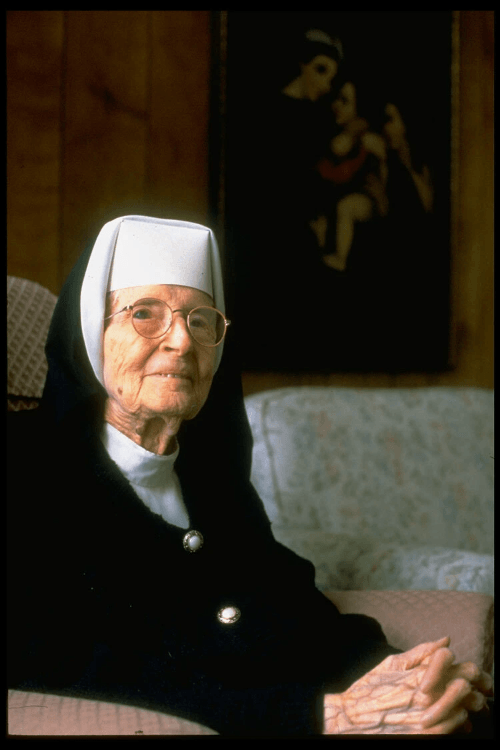
Sister Mattheia, a schoolteacher for over 50 years, wrote her obituary at 102 and died shy of her 105th birthday. She was a crafter who knit one pair of mittens per day, over 1500 pairs total, which she donated to charity. She tested high on her cognitive tests and was sharp until her death, and on autopsy, her brain showed few signs of aging. Fortunately for her, she lived a life of learning, challenges, education, and an attitude of gratitude. In addition, the nuns' community lifestyle, which is inherently social, is believed to have contributed to their overall longevity.
Fortunately, Sister Matthias' brain was resilient to disease; she had significant "cognitive reserve", or an abundance of backup brain cells. Resilience, or the "ability to roll with the punches," is a desirable personality trait, and our brains also crave it; the more, the better.
Cognitive reserve, a term coined by Yaakov Stern and revealed in the Nun's Study, confirmed that the brain can continue to increase networks, and even better, coordinate with established networks, despite aging and or a challenging disease.
The Notre Dame nuns lived purposeful and intentional lives that included active learning, depth of language, exercise, a nutritious diet, sleep, and socialization—all valuable components for developing cognitive reserve over their lifetimes. Their greatest gift was allowing their lives and brains to be examined, which confirmed that how we live can influence the health of our brains and, by extension, the quality of our lives and our loved ones.
Sister Matthia, 103, did not like her hands
to be photographed as
"they looked too old".